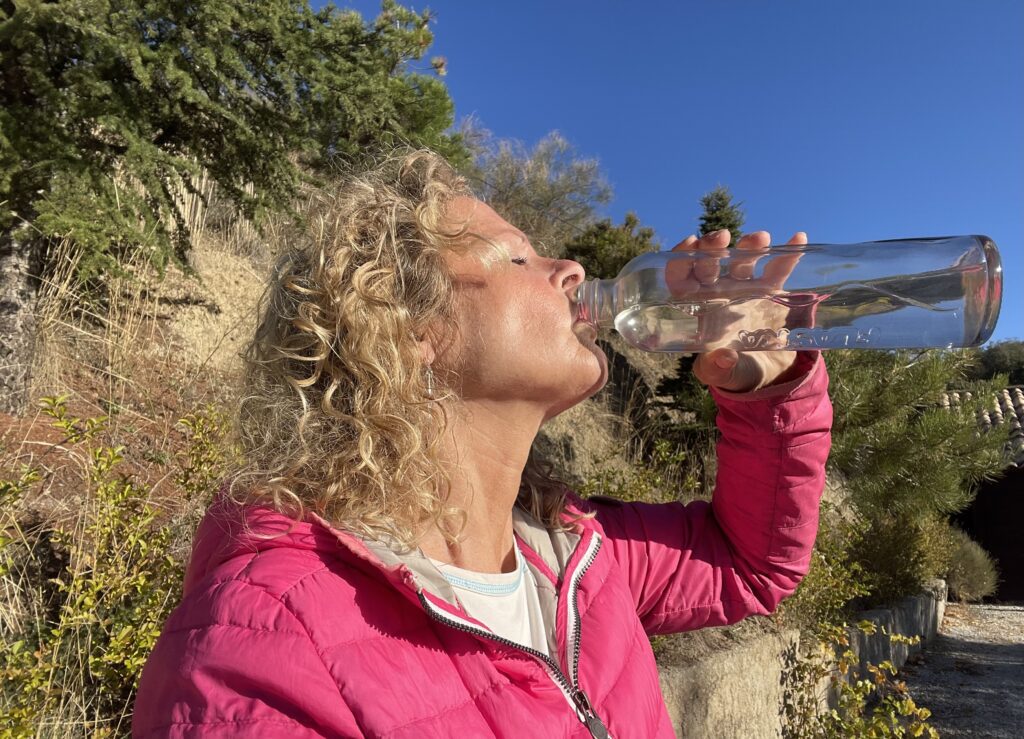

Humanity’s biggest paradox may be that we search for freedom through the very thing that keeps us trapped: control. The mind wants certainty, answers, preparation, and safety. Water shows us a completely different intelligence, one that moves without needing to know the whole path first. Perhaps freedom does not come from knowing more, but from learning how to meet the unknown differently. This is the deeper wisdom behind Bruce Lee’s famous invitation: “Be water, my friend.”
Observing the Mind’s Games: Our Greatest Handicap
The human mind plays endless games with us, creating patterns of thought and behaviour that often become our greatest handicap. We’ve become so accustomed to these games that we barely notice them running in the background of our consciousness. The mind analyses, categorises, resists, and controls – all while convincing us these activities serve our highest good. Water, by contrast, does exactly the opposite. It doesn’t analyse its path; it simply flows. It doesn’t resist obstacles; it moves around them. It doesn’t control; it responds.
What does water do?
Water demonstrates fluid intelligence, adapting to whatever it encounters without resistance or judgment. It teaches us that our true nature is not in our thinking but in our flowing.
What makes this particularly challenging is that our bodies are approximately 70% water, and by molecular count this is 99%, yet the water within us has listened to our minds for so long that it has forgotten its free-flowing nature. Instead of moving as water naturally does – fluidly, adaptively, responsively – our internal water has become conditioned by the mind’s patterns of control and resistance. It has learned to hold tension rather than flow, to constrict rather than expand, to follow mental directives rather than its own fluid intelligence. This is the first step in our transformation: recognising that the water in our bodies has been trained by the mind rather than by its own wisdom.
The Control Paradox: Why Letting Go of Control Feels So Hard
We live in a world that worships certainty. We collect facts like treasures, build knowledge fortresses around ourselves, and applaud those who claim to have all the answers. Yet a paradox is at play: the more we try to control through knowing, the more trapped we become. Our minds play clever games with us, convincing us that knowledge equals safety, that preparation equals protection. We’ve learned to see our mental strategies as strengths rather than limitations. We celebrate the mind’s ability to anticipate, plan, and prepare, never questioning whether these patterns serve our highest good.
What does water do?
Water doesn’t try to control its path because it has no mind, no resistance. It simply flows around whatever it encounters. What we resist persists, and that is how our flow stops. The very thing we think keeps us safe, our knowing, becomes the prison that keeps us from the freedom we seek.
The Liberation of Not-Knowing: Finding True Control in Emptiness
In the emptiness of not-knowing lies a paradoxical power that most never discover. When we release our need to know, we create space for authentic control to emerge, not the control that manipulates outcomes, but the control that masters self. The mind fights this emptiness with resistance games, creating elaborate strategies to avoid the void it fears. Yet true power comes not from filling the void but from entering it consciously.
What does water do?
Water teaches us this through its very nature. Water’s strength comes not from resisting but from yielding, not from knowing its path but from responding to the flow. When we stop trying to control through knowing, we discover a deeper control that comes from allowing. This is the liberation of not-knowing, the freedom that comes when we stop fighting the current and remember we are the current itself.
The Preparation Paradox: When Control Masquerades as Competence
Perhaps nowhere is the mind’s deception more evident than in how we’ve learned to value preparation. The most competent people often struggle most with not-knowing because they’ve built their entire identity around being prepared. We learn to override our soul’s communication with “logical reasoning,” convincing ourselves that this rational voice is our highest guidance. The mind plays validation games here, seeking approval through preparation and control. We argue that preparation and insecurity are unrelated, pointing to our successes as proof that our strategies work. We rationalise fear-based control as “good traits” that make us excellent at our jobs. Yet the crucial distinction remains: actions aren’t wrong, but their emotional source determines everything. Society conditions us to reward control-based preparation, while water teaches us that true competence flows from trust, not control. When preparation comes from trust, it’s natural and flowing; when it comes from fear, it’s rigid and controlling, with a constant fear of failing, regardless of our success.
This pattern manifested powerfully in my own experience with imposter syndrome. I knew everything about this syndrome, yet refused to admit it applied to me because I wasn’t aware of my underlying fear. I was always afraid people would discover that I wasn’t as good as I presented myself. Instead of allowing the fear to reveal its message, I pushed against it, challenging it directly rather than listening. This fear drove me to constantly prove my competence through preparation and control, while the very fear of being exposed kept me trapped in a cycle of over-preparation.
Other manifestations include:
- The perfectionist who cannot delegate because “no one can do it as well” – unaware this stems from fear of being seen as inadequate if others succeed.
- The over-preparer who researches endlessly before making simple decisions, believing this thoroughness demonstrates competence rather than fear.
- The constant learner who accumulates certifications and degrees without applying the knowledge, using learning as a way to avoid being in the unknown.
The Shift from “Figuring Out” to “Being With”: A New Relationship
The transformation from analysis to presence changes everything about how we experience reality. “Figuring out” keeps us in our heads, creating distance between observer and observed – meaning we create a separation where “I” am here analysing “that” over there, rather than experiencing ourselves as part of the flow we’re observing. “Being with” dissolves that separation, allowing direct experience without the filter of interpretation. The mind plays avoidance games here, using thinking to keep us from direct experience. We analyse rather than feel, categorise rather than connect, explain rather than experience.
What does water do?
Water serves as our gateway to this new relationship. Water doesn’t figure out its path; it simply is with its path. Water doesn’t analyse its surroundings; it responds to them directly. When we sit with water, we learn to be with rather than figure out simply. This shift from analysis to presence transforms not just our experience but our very being.
The Void-First Protocol: Practices for Letting Go of Control
How do we cultivate comfort with uncertainty when everything in us resists it? The Void-First Protocol offers practices for embracing not-knowing. First, we must recognise when we’re controlling rather than allowing, when our actions come from fear rather than trust. The mind plays deception games here, convincing us we need its strategies to survive. We are wise to notice these rationalisations and question our “good traits” when they serve fear rather than flow.
What does water do?
Water meditation helps us practice being with rather than figuring out. Sit with water and observe its willingness to be with whatever it meets. Practice building self-trust by taking small steps into uncertainty without trying to control the outcome. Each time we choose presence over preparation, flow over force, we strengthen our capacity to not-know.
The Deeper Hydration: What Opens When We Stop Trying to Know
When we move from “figuring out” to “being with,” everything transforms. Our relationship with ourselves, with others, with reality itself shifts from something to be understood to something to be experienced. The unexpected clarity that emerges from surrendering control surprises many who fear that not-knowing means confusion. In reality, not-knowing is the gateway to deeper knowing, the kind that comes not from accumulation but from revelation.
What does water do?
Water responds to our emptiness with its deepest wisdom. When we approach water with a full cup of knowledge, we’re not open to receiving anything new. When we approach with empty hands, water fills them with treasures beyond what any mind could conceive. This is the deeper hydration, not of information but of essence, not of knowledge but of wisdom.
Beyond the Mind: The Water Dissolution Protocol
Simply “going out of your mind” doesn’t work because the mind co-opts even our attempts to transcend it. The mind’s final game is making even our surrender another strategy to be perfected. We need something beyond mind, something that can dissolve mental patterns without fighting them.
What does water do?
This is where the Water Dissolution Protocol comes in. Water doesn’t fight the mind; it surrounds it, permeates it, and gradually dissolves the rigid structures. Water teaches us that the only way beyond the mind is through complete saturation, not opposition. When we allow water to dissolve our mental patterns rather than fighting them, transformation happens naturally.
The practical application of becoming water involves:
- Becoming aware of the mind’s games as they play out
- Choosing differently – consciously selecting the water-way over the mind-way
- Noticing how the mind resists this choice and choosing again
- Repeating this process until the water-way becomes our natural response
The final surrender comes when water becomes the mind, and the mind becomes water, when thinking ceases to be a separate activity and becomes simply another movement in the flow of being. There is no mind to transcend, only water to become. This is the ultimate realisation: we are not separate from the flow we seek to understand.
When you find yourself caught in the mind’s games, remember water. Remember its willingness to be with whatever it meets. Remember its capacity to dissolve whatever contains it. Remember its wisdom in flowing around obstacles rather than fighting them. In water, we find not just a teacher but ourselves, not as we think we are, but as we truly are: eternal, flowing, free.

Want to Go Deeper?
In my upcoming book, I AM Eternal Living Water: Remember Who You Truly Are, I dedicate a chapter to the conversation of the soul and how it communicates with you through the water in your body, how the mind tries to control and overrule that conversation, and the price we pay when we stop listening to our deeper knowing.
If you would like to be notified when the book is released, you can sign up through my Linktree:
https://linktr.ee/TinekeRensen
What’s next?
Go to the FREE menu to see if you want to learn more about water.
Feel free to share this blog under this section if you found it valuable. You can also like the content. Click on the red link called 0 Comments:
Do the quiz and find out what water flow type you are
Start clearing, cleaning and energising your water
Check out some of the webinars I gave
If you go to contact-page, you can schedule a free 15-minute call to find out how I can help you with advice about one of my coaching programs, a product in the shop or one of the water healing retreats and trips.